


3 Dots - Connect em all
4.53.67K Reviews
App Specs
- Version
- 2.7.1
- Updated On
- License
- Free
- Downloads
- 1,000,000+
- Developer
- LIHUHU PTE. LTD.
- Categories
- Board
- Platform
- Android, iOS
Screenshots
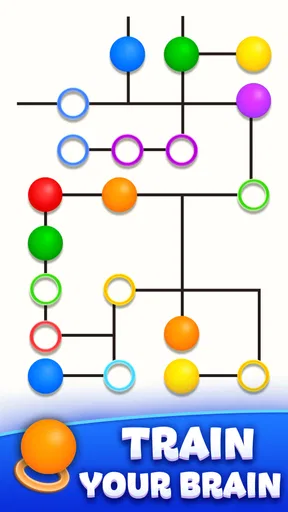
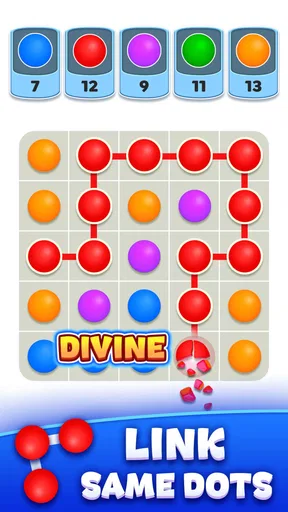
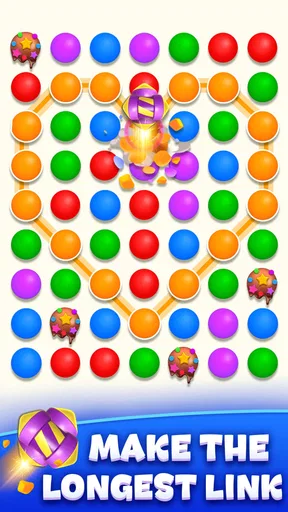
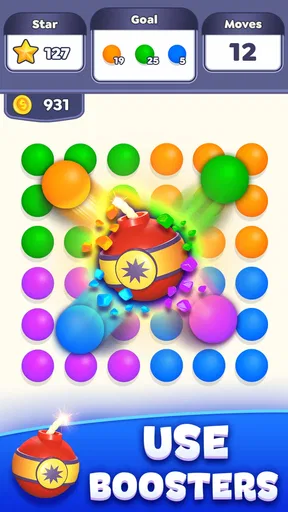
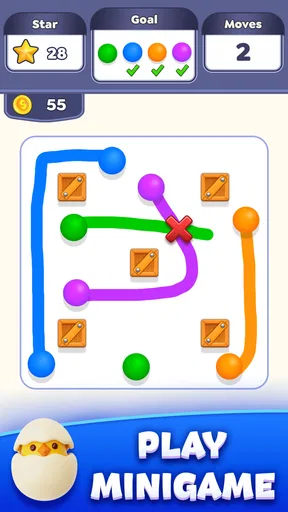
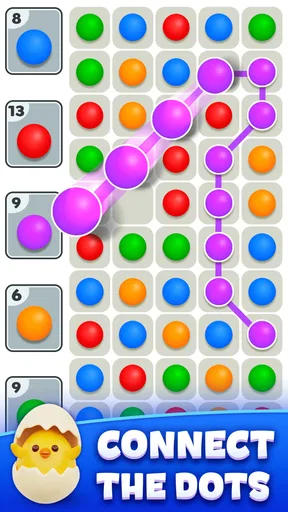


 Analysis by AppCompare
I spent time with 3 Dots - Connect em all as a quick, color-matching board game, and its appeal became clear almost immediately: it turns a simple connection idea into a compact puzzle that is easy to start but can still make you pause over your next move. You connect dots of the same color, look for a clean route, and try to solve each board without treating every move as an afterthought. It is the kind of game I can open for a short break without first learning a complicated rule set.
That simplicity is also the main reason I would recommend it selectively. This is not a deep strategy board game with a large rulebook, a competitive table, or a campaign built around story. It is a focused dot-link puzzle for people who enjoy visual organization and gradually improving their decisions. If you want something calm, readable, and immediately understandable, it has a lot going for it. If you need constant novelty, social play, or a more demanding strategic system, its narrow format may feel limiting.
How the puzzle feels in everyday play
The central task is straightforward: connect matching colors on the board. The challenge comes from the space between those two ideas. A route that looks obvious may block another color, consume useful room, or leave an awkward gap elsewhere. I found myself switching between short-term satisfaction and longer-term planning. Completing one connection feels good, but the better move is often the one that keeps several possibilities open.
That makes the game approachable for a wide range of players. You do not need to memorize card effects, manage resources, or understand a complicated turn order. The visual goal is easy to recognize, which helps when I want a game that starts working within seconds. At the same time, the board gives the simple rule enough room to create mistakes. I could understand what I was supposed to do and still discover that my first instinct was not the best one.
In a realistic everyday situation, I would use it while waiting for an appointment or taking a short break between tasks. I can play a little, stop thinking about it, and return later without having to reconstruct a story or remember a large amount of information. That low mental overhead is one of its strongest qualities. It fits the moments when I want interaction rather than passive scrolling, but I do not have the time or energy for a long session.
The board-game classification makes sense because the experience is built around arranging moves within a defined play area. However, it is closer to a solo visual puzzle than to a traditional tabletop match. There is no need to gather other players around a table, and the enjoyment comes from solving the layout in front of me rather than outmaneuvering an opponent. This distinction matters if you are comparing it with digital versions of chess, checkers, or competitive board games.
Small decisions matter more than fast fingers
One useful habit is to inspect the whole board before connecting the first pair. The most tempting color is not always the best starting point. I get better results when I first identify crowded areas, narrow spaces, and colors whose possible routes appear limited. That approach changes the game from random tapping into a short planning exercise.
Worth Reading Before You Choose

EA SPORTS FC Mobile 26 Is a Bigger Football Game, but It Takes Time

Flipboard Shows What News Apps Must Do Beyond the Feed

Switching to Android Auto Means Rethinking Your Driving Routine

Google Calendar Makes a Crowded Week Easier to Manage

Ludo King Makes the Most of the Minutes Between Plans

Baby Panda World Brings Quick Play to Modern Phones, but Its Game Library Feels Busy
I also learned to avoid treating an early connection as permanent proof that I had chosen well. A route can be valid and still be strategically poor if it makes the remaining colors harder to join. When I reach a dead end, undoing the mental plan and looking for a different order is more productive than forcing the same idea. This is a small but important distinction: the game rewards spatial awareness more than speed.
Another practical tip is to work from constraints rather than from color preference. If one pair has only a small amount of usable space, I consider it first. A color with several open routes can usually wait. This method is especially helpful on boards that initially look busy, because it reduces the number of possibilities I need to evaluate at once.
The game also works as a light concentration exercise. I would not describe it as a formal training tool, but it encourages scanning, pattern recognition, and thinking ahead. For a child or a casual player, the clear color relationships make the objective approachable. The Everyone age rating reflects that broad accessibility, although younger players may still need patience when a route that looks correct prevents the rest of the board from working.
What the free experience means for value
There is no purchase price required to start playing, so the entry barrier is low. That matters for a puzzle this simple: I can try the core experience without deciding in advance whether it deserves money. The game is free, while optional in-app purchases range from $0.99 to $99.99 per item. I would therefore treat the free access as the main test of value and consider any optional spending separately rather than assuming it is necessary.
The honest value question is not whether the game costs nothing to install. It is whether the free play gives me enough satisfying problem-solving to justify keeping it. For someone who enjoys short color puzzles, the answer can be yes. The basic idea is immediately usable, and the low commitment makes it easy to return whenever I want a quick mental reset. For someone who expects a broad collection of unrelated modes, a substantial narrative, or a rich multiplayer system, free access alone will not solve the mismatch in expectations.
I would be cautious with optional purchases until I had played enough to understand my own habits. A player who only opens the game occasionally may get all the value needed from the free experience. A dedicated puzzle fan might decide that an optional item is worthwhile if it removes a particular frustration or supports longer play, but that is a personal value judgment rather than something I would assume for everyone. The wide purchase range also makes it especially important to check each item before spending.
In practical terms, this is a good candidate for a no-risk trial. Install it, play during the kinds of short gaps when you normally reach for your phone, and see whether the connection mechanic remains enjoyable after the first impression. If it becomes a satisfying routine, the free format has done its job. If the boards start feeling repetitive or too modest, there is little reason to pay simply because the game is already on the device.
Where it sits among familiar alternatives
Compared with a classic match-three game, the pleasure here is less about rapidly creating combinations and more about planning a route through a fixed visual problem. Match-three games usually reward quick pattern spotting and chain reactions; this style of puzzle asks me to consider how one connection affects the rest of the board. I prefer 3 Dots when I want a quieter, more deliberate experience rather than a burst of cascading actions.
Compared with Sudoku, it is more visual and less number-based. Sudoku gives me a grid of logical constraints that I solve through candidates and elimination, while this game lets color and space carry the information. Someone who enjoys Sudoku but dislikes numbers may find this more inviting. On the other hand, a serious Sudoku player looking for layered deduction may find the color-link format less intellectually varied.
Compared with chess or checkers, it offers far less competitive depth but also far less preparation. There is no opponent to read, no opening knowledge to build, and no need to commit to a long match. That makes it a better fit for a private, interruption-friendly break. It is a worse fit for anyone who wants bluffing, rivalry, or a system that keeps producing new strategic relationships between two players.
Compared with a typical casual arcade game, the slower pace is both a strength and a weakness. I appreciate not having to react under pressure, especially when I am tired or distracted. But players who enjoy timing challenges, animated action, or immediate feedback may find the experience too restrained. The right comparison is not “better than every puzzle game”; it is “more thoughtful than a reflex game, but less expansive than a full strategy title.”
Tradeoffs that become noticeable over time
The focused design keeps the rules friendly, but it also narrows the experience. Once I understand the connection principle, much of the challenge depends on the arrangement of the dots rather than on a growing set of mechanics. That can be satisfying when I want consistency, yet it may not be enough for players who need frequent surprises or a strong sense of progression.
There is also a difference between being difficult and being interesting. A board can make me think because the routes are awkward, but that does not automatically create the deeper variety found in games with multiple systems. I sometimes enjoyed the clean concentration more than the individual puzzle itself. If you are looking for a game that teaches new rules as you advance, this may feel intentionally limited.
The free-to-play structure deserves attention as well. Optional purchases do not make the game a bad value, but they mean I would not judge it solely by the word “free.” The sensible approach is to enjoy the accessible core first and spend only when a particular optional item has clear value for your own use. I would also avoid making a purchase during a moment of frustration after getting stuck; that is when it is hardest to tell whether I want a useful addition or simply want the current obstacle to disappear.
Another tradeoff is the lack of social pressure. I can play at my own pace, which is excellent for a private break, but there is no built-in opponent pushing me to improve in the way a competitive board game can. If your motivation comes from rankings, shared matches, or showing a clever solution to friends, a multiplayer-focused alternative will probably hold your attention better.
The game is also best when I give it a small, clear role. I would not choose it as my only mobile game because its appeal is concentrated in one type of activity. I would choose it alongside a word game, a strategy game, or something more active. In that position, it works well: it fills the quiet spaces without demanding that every session become a major event.
Who is most likely to get real value
I think the strongest audience is made up of casual puzzle players who like visual order. If you enjoy examining a board, spotting a route, and correcting a plan without a timer dominating the experience, this is a natural fit. It is also suitable for people who want a game that can be learned quickly and revisited without a long tutorial.
Parents looking for an approachable board-style game for a child may appreciate the clear color objective and Everyone rating. I would still encourage playing together at first, not because the rule is complicated, but because children may connect the obvious pairs too quickly and then become frustrated when the remaining colors cannot be completed. Showing them how to scan the entire board before moving can turn that frustration into a useful planning lesson.
It can also suit older players who prefer calm interaction and readable goals. The game does not require fast reactions, extensive gaming experience, or knowledge of a franchise. That makes it a reasonable choice for sharing a phone with someone who normally avoids action games. The best shared activity would be discussing possible routes rather than competing directly.
I would skip it if your priority is a substantial strategy experience. A digital board game with opponents, varied rules, or long-term tactical development would serve you better. I would also skip it if you mainly want a relaxing game with no possibility of getting stuck; the very act of planning routes means some boards may require patience and a willingness to rethink an earlier move.
It is less suitable for players who need a strong narrative reason to continue. The satisfaction comes from solving the board, not from uncovering characters, locations, or plot. Likewise, if you dislike free games with optional purchases on principle, the purchase range may make another paid puzzle a more comfortable choice, even though this one can be started without paying.
Device facts and what they tell me
The game comes from LIHUHU PTE. LTD. and is available as a free board title for Android users running version 7.0 or later. Its current version is 2.7.1, and it has passed the one-million-install mark. Those figures suggest that the format has reached a broad casual audience, while the average rating of 4.5 from roughly thirty-four thousand ratings indicates generally positive reception.
I would not treat popularity as a substitute for personal fit, but it does make the game easier to recommend as a low-commitment experiment. The review volume, at about three thousand seven hundred reviews, also gives the title a visible history of player response. What matters most to me, though, is whether the core loop matches the way I use my phone: short sessions, simple rules, and enough planning to feel engaged rather than merely occupied.
The technical requirement is relatively accessible for Android users with a device on version 7.0 or newer. I would still check the operating system before trying to install it on an older phone, especially if that device is kept for a child or used as a backup. The game’s appeal depends on being easy to pick up, so compatibility is worth confirming before expecting it to fill a particular routine.
My buy-or-skip decision
I would start with the free version and recommend keeping it if you enjoy the first several sessions for the right reason: not just because the colors look pleasant, but because you like planning connections and revising routes. Its best value is as a compact solo puzzle that gives a short break some structure. The free entry makes that test straightforward, while the optional purchases should remain optional in your decision.
I would not buy anything immediately. I would first notice whether I return because I genuinely want another board or because I am trying to overcome a single irritating obstacle. That distinction protects the value of the free experience and helps prevent an impulse purchase from becoming the reason I keep playing. If the game becomes part of a regular routine, an optional item may make sense for a committed player; otherwise, there is no need to spend.
My final view is positive but specific. 3 Dots - Connect em all is worth trying for calm, visual puzzle sessions rather than for deep board-game strategy. It is accessible, easy to understand, and more thoughtful than its simple premise first suggests. Its limitations are equally clear: the format is focused, the social and narrative sides are minimal, and optional purchases mean “free” should be evaluated carefully. I would recommend it to a friend who wants a quiet game for spare minutes, and I would point that friend toward a richer strategy or multiplayer alternative if they want a longer-lasting system to master.
Pros
- Simple rules make it easy to start playing immediately.
- Short levels fit well into quick gaming sessions.
- Minimalist visuals keep the board clear and readable.
- Increasing challenges provide a steady sense of progression.
- Works well for players who enjoy relaxing logic puzzles.
Cons
- Some puzzles may feel repetitive after extended play.
- Later levels can become difficult without much guidance.
- Limited gameplay variety may reduce long-term appeal.
- Ads may interrupt the experience between puzzle rounds.
- Players seeking action or story elements may find it too basic.
FAQs for 3 Dots - Connect em all
What is 3 Dots - Connect em all and how do you play it?
3 Dots - Connect em all is a casual puzzle game centered on linking matching colored dots. After installing it, you generally connect three or more dots of the same color by drawing a path across adjacent pieces. Completing connections clears the board and may create space for new moves. The controls are simple, but later levels usually require careful planning, efficient routes, and attention to limited moves or level objectives.
Is 3 Dots - Connect em all suitable for beginners and casual players?
Yes, the game is designed to be easy to understand, making it suitable for beginners and people who enjoy short puzzle sessions. The early stages normally introduce the connection mechanic gradually, so you can learn without reading complicated instructions. As you progress, the layouts and objectives become more demanding. It works well for casual play, although players who prefer fast action or deep story content may find the experience too simple.
Does 3 Dots - Connect em all work offline?
Many of the core puzzle levels can usually be played without a constant internet connection, which makes the game convenient for travel or quick offline sessions. However, certain features may still require connectivity, including advertisements, online events, cloud synchronization, updates, or in-app purchases. Because offline availability can vary between versions and devices, it is best to test the game after installation rather than assuming every feature will function without internet access.
Are there advertisements or in-app purchases in 3 Dots - Connect em all?
The game may include advertising, particularly between levels or when you choose to receive an optional reward. Some versions can also offer in-app purchases for removing ads, obtaining hints, or unlocking other conveniences. You should review the store listing and purchase settings before downloading, especially if children will use the device. The basic gameplay can often be enjoyed without spending money, but optional purchases may affect how quickly you progress.
What permissions and device requirements should I consider before downloading it?
Before downloading 3 Dots - Connect em all, check the official Google Play or App Store listing for its current size, supported operating-system versions, and recent update information. A modern entry-level phone should generally handle this type of puzzle game, although performance can vary on older devices. Also review the permissions requested during installation. Avoid unofficial download sources, and make sure you have enough free storage for the app and future updates.


